
Shopping
Korean pharmacy skincare — why tourists go, and what sells
Foreign spending at Korean pharmacies grew faster than at any other medical service in the first half of 2026. Here is what goes in the bag, and why it starts with a procedure rather than a shelf.
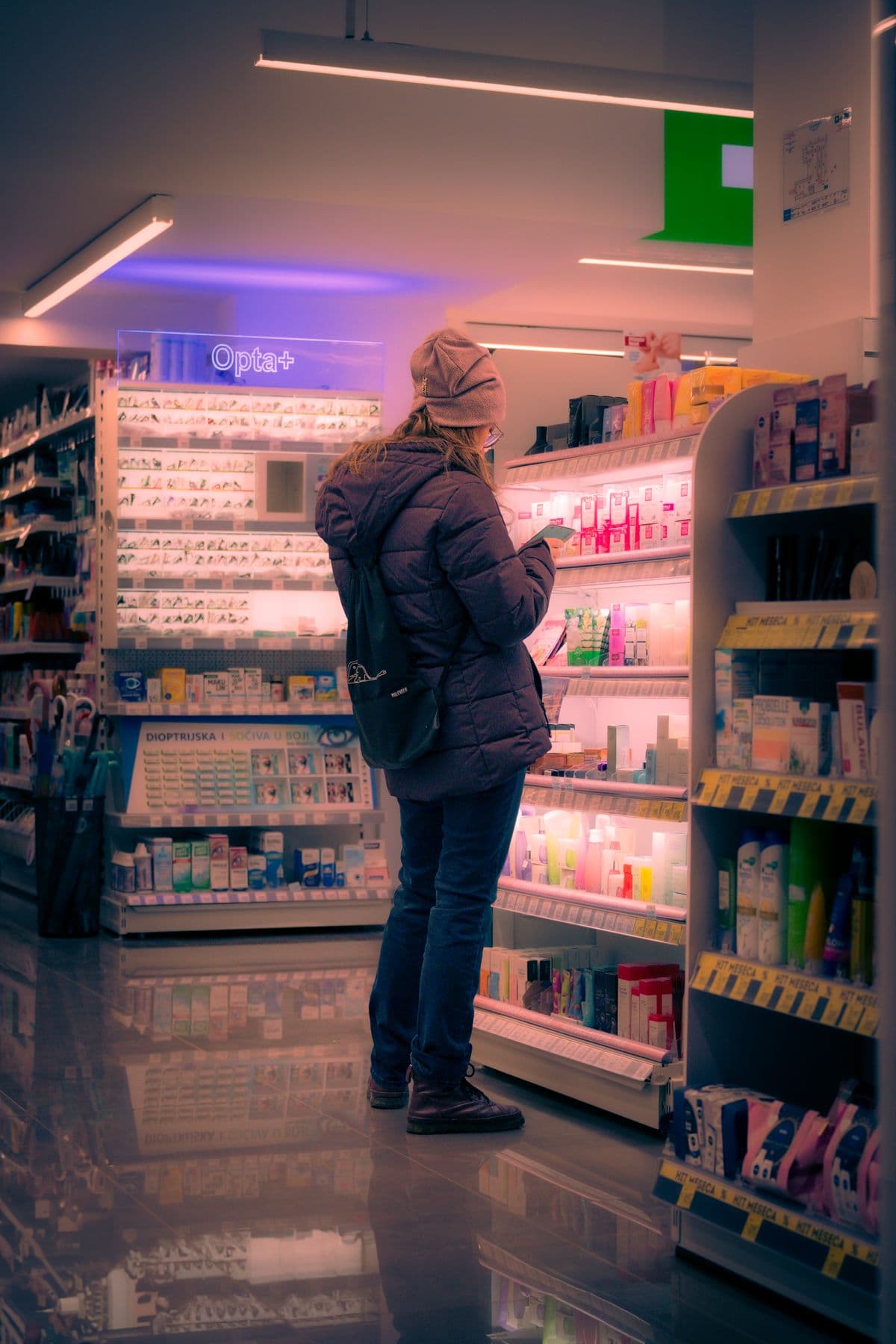
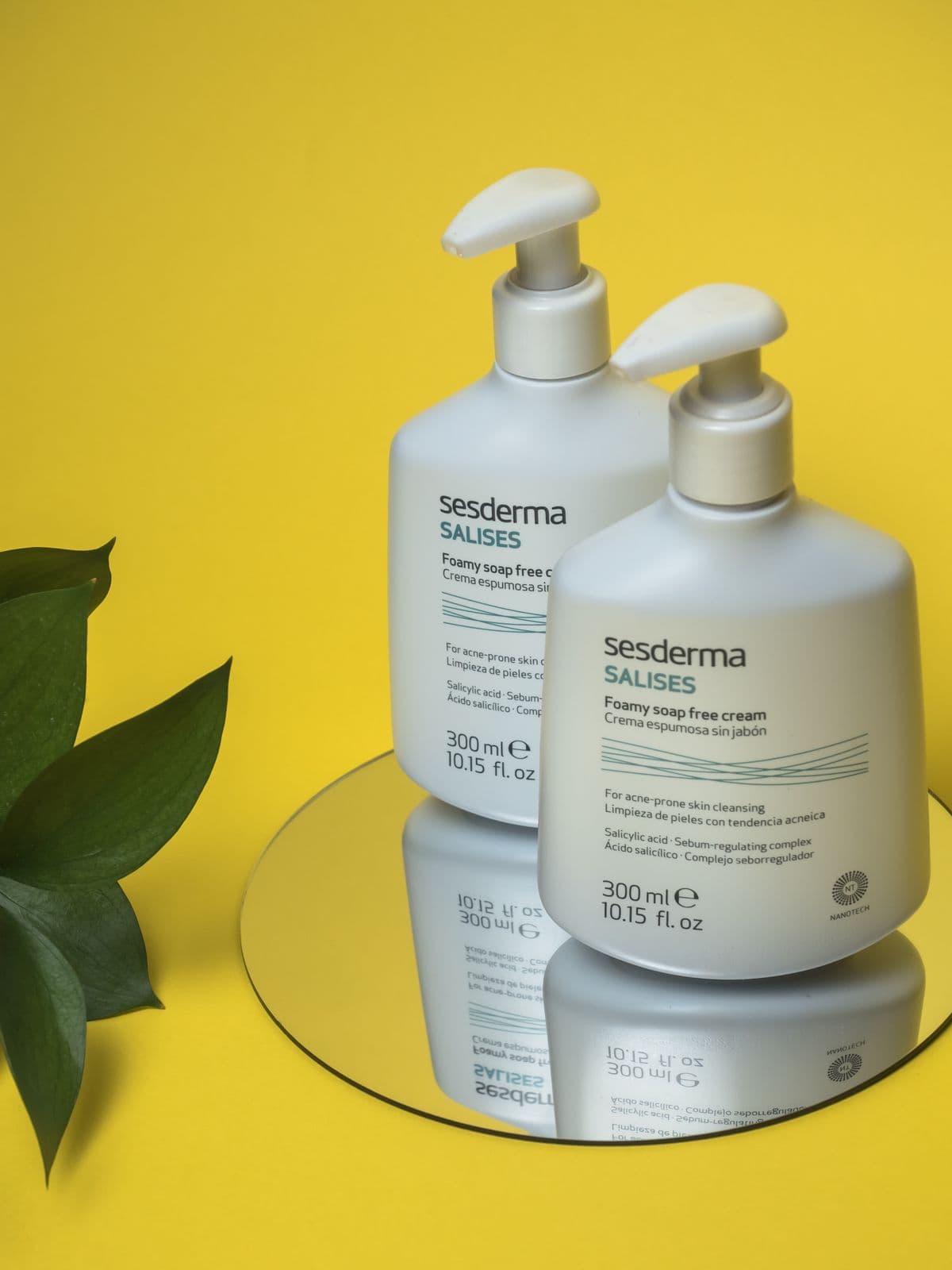
You come out of a Seoul dermatology clinic holding a list, and the list ends at a pharmacy — not at a beauty store. In the first half of 2026, foreign card spending at Korean pharmacies grew faster than at any other medical service in the country.
So this is what the Korean pharmacy (yakguk) actually sells to visitors, roughly what it costs, who is standing behind the counter, and how buying there differs from a self-serve beauty aisle. The figures come from Korean card-spending analysis and on-the-ground reporting, current as of August 2026.
- 01Foreign spending at Korean pharmacies rose 1,176.9% in the first half of 2026BC Card's analysis of inbound visitor spending puts the jump at 1,176.9% year on year for the first half of 2026 — the steepest increase of any medical service in the set. Pharmacies went from 0.3% of foreigners' medical-tourism spending in 2025 to 2.0% in 2026. Taking 2025 as a whole, foreign visitors spent ₩141.4 billion at Korean pharmacies, 142.2% more than the year before.
- 02The pharmacy is the stop after the dermatology clinic, not a cheaper substitute for oneWhat sits under the numbers is a route, not a fad. Visitors book a laser, lifting, skin booster or Rejuran session at a Seoul clinic, then buy the aftercare — derma cosmetics and quasi-drugs — at a pharmacy on the way out. Over the same half-year, foreigners' medical spending in Korea rose 98%, and the pharmacy line moved alongside it.
- 03PDRN regeneration creams are what the counter leads with now, and that is a recent switchRegeneration cream containing PDRN, alongside EGF products, is what foreigner-facing pharmacies put at the front. The trade describes three waves: herbal remedies and medicated pain patches first, then acne and brightening ointments, and only lately PDRN, which overtook both. If you have just had a procedure, this is the row you will be pointed at.
- 04The rest of the bag is ordinary pharmacy stock — patches, eye drops, sunscreen, red ginsengAfter the regeneration line, the items that leave in volume are medicated ointments for acne and pigmentation, then artificial tears, pain patches, lip balm, sunscreen, collagen and vitamin C, and red ginseng. These are the staples Koreans buy for themselves, and they are what fills the space around the one expensive tube.
- 05The clearest example is a lip ointment that costs about ₩8,000: CurifDongwha Pharm's Curif ointment is an ointment for the lips. It sells for around ₩8,000 and is built on five active ingredients — enoxolone, allantoin, pyridoxine hydrochloride, tocopherol acetate and cetylpyridinium chloride hydrate — with no steroid and no antibiotic. It spread through Japanese social posts and trip write-ups, and Japanese visitors are the main buyers; most of them treat it as everyday lip care rather than as a medicine for one particular problem.
- 06It is a consultation, not self-service — the pharmacist asks before recommendingSome of these pharmacies do not merchandise best-sellers at all. A pharmacist looks at your skin, asks what procedure you had, and only then proposes something. What people arrive asking for splits by market: at one Hongdae pharmacy, customers from China ask about acne scars and regeneration, customers from Japan about melasma and brightening. Greater China is the largest group on the floor, followed by Singapore, Japan and the US, and showing a product photo saved from social media is a perfectly normal way to buy.
- 0728 foreigner-focused pharmacies opened in Seoul's Jung-gu — the Myeongdong district — between September 2025 and June 2026Jung-gu, the district Myeongdong sits in, added 28 over those months, with 9 in Seongsu in 2026 alone and 7 in Mapo; Busan added 6 between March and June 2026, clustered around Haeundae and Nampo-dong. The trade puts the national count at at least about 50. Some are foreign-customer businesses outright — more than 95% of visitors to Verynew Pharmacy in Myeongdong are foreign, and the share is above 60% at Hongik Pharmacy by Hongik University Station in Mapo-gu.
- 08Seven in ten of foreigners' medical transactions in Korea are pharmacy purchases, and single baskets reach ₩1,000,000Counted by transaction, 68.96% of foreigners' medical purchases in Korea were made at a pharmacy in June 2026, up from 56.37% in July 2025; counted by value the pharmacy share was 12.90%, so this is many modest tickets rather than a few large ones. Modest beside a clinic bill is not the same as cheap — pharmacies report baskets running from the low hundreds of thousands of won up to the ₩1,000,000 range. Growth follows the tourist streets: in May 2026, pharmacy spending in one Seongsu neighbourhood was up 15,249% year on year, against 206% across pharmacies overall. Budget the pharmacy as its own line rather than as change left over from the clinic.
Sources
Written by millio from the reporting linked below. Follow the links for the originals.
- Foreigners flock to an "unexpected place": pharmacy spending up 1,177% — pharmacy spending growth, ₩141.4 billion spent at pharmacies in 2025Asia Economy · August 2026
- Foreign medical tourism has changed: pharmacy spending up 1,176.9% — pharmacies' share of medical tourism from 0.3% to 2.0%Yakup Gongron (pharmacy trade paper) · August 2026
- 7 in 10 foreign medical purchases are at pharmacies — Korea Tourism Data Lab, June 2026: pharmacies 68.96% of transactions, 12.90% of spendingYakup Gongron (pharmacy trade paper) · July 2026
- From Myeongdong to Busan's Haeundae, foreigner-focused K-pharmacies spread fast — new specialised pharmacies by region, PDRN's popularityDaily Pharm · July 2026
- "K-pharma" tailwind in Myeongdong's pharmacy district — Curif ointment ingredients and price, Berinew Pharmacy's 95% foreign customersPharm News · June 2026
- Inside K-pharmacy shopping — top items, customer nationalities, spend per purchase, pharmacy spending growth in SeongsuAju Business Daily · June 2026
- Foreigners sweep pharmacy cosmetics off the shelves at a "Hongdae pharmacy" — Hongik Pharmacy's foreign share, preferences by nationality, consultation-led serviceJoongAng Ilbo · February 2026
- ₩145.2 billion at Korean dermatology clinics — how treatments (laser, lifting, skin boosters, Rejuran) drive demand for aftercare productsMoney Today · July 2026
Also bookable in Seoul
- Park Jun Beauty Lab MyeongdongHair Salon · MyeongdongEnglish, Chinese, Japanese₩160,000Typical priceRequest to book
- Jooyeon AestheticSkin & Esthetic · GangnamEnglish₩225,000Typical priceRequest to book
- BarbielleLash & Brow · MapoEnglish₩70,000Typical priceRequest to book
- Krasny NailNail Salon · GangnamEnglish₩70,000Typical priceRequest to book
Walk into the pharmacy. Book everything else in advance.
The pharmacy you can do alone. Hair, nails, a studio session, a tour — those run on appointments, and the appointment is the part that wants Korean, a Korean phone number and usually a deposit. On millio every menu, price and cancellation term reads in your language; offer up to three times you could go and let the shop confirm one.
Browse places to bookNext pick
8 things2026.08.24
The Olive Young haul, planned — 8 things to settle before you fill the basket
Korea's beauty aisle is essentially one chain, 1,380 stores deep. The hard parts are not the products. They are the refund at the register, which branch you walk into, and what your suitcase can actually carry home.
7 terms2026.08.14
Korean skin menus, word by word — 7 terms worth knowing first
Translation apps turn the menu words for a course, regeneration, firmness and calming all into “care”. They are four different bookings, in two different kinds of building.
7 things to know2026.09.04
Korea's tax refund and your beauty trip — the surgery refund ended, salons never had one, shopping still does
Since January 1, 2026, foreign patients pay Korea's 10% VAT on cosmetic procedures like everyone else. A haircut, a nail set or a facial was never refundable. The products you carry home still are — from ₩15,000 a receipt. Here's where the line runs, in seven points.